
Five people queued outside Chantal Dagah’s newsstand in Cotonou, Benin’s economic capital a rare sight that signaled something unusual was afoot. Normally, traffic at her kiosk, located just steps from several government ministries, trickles in slowly. But in the aftermath of the attempted coup, residents of the coastal city were eager for updates.
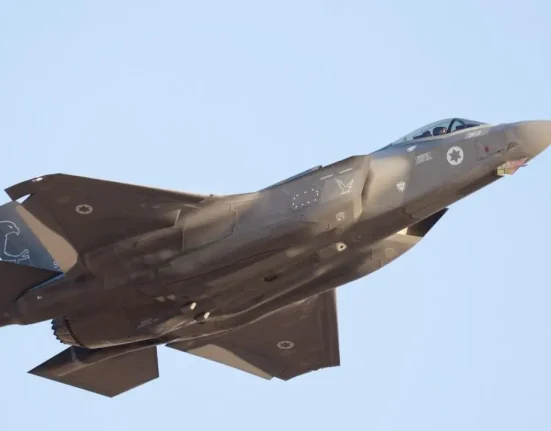
The previous day, a group of soldiers had seized the national television station and declared that President Patrice Talon was deposed. The putsch, however, was swiftly crushed by loyalist forces with assistance from the Nigerian air force. “I don’t usually buy newspapers, but today I grabbed two, because something extraordinary happened yesterday,” said customer Stephane Nelson, browsing the stands.
Despite the airstrikes and troop movements the day before, calm had largely returned to Cotonou as life resumed in the city. Headlines reflected a sense of reassurance: “Talon reassures the country after foiled coup” read Le Parakois, while L’Independant declared: “President Talon’s statement reassures and re-enchants the Nation.” The most visible remnants of the unrest were tanks lining Boulevard de la Marina, the major artery connecting the presidential palace, airport, seaport, and ministries. Some roads leading to the palace remained closed.
Nelson, a property developer, said, “It was important to know more. There’s still a lot in flux, but the stakes are high, especially since a sovereign country had to intervene to support our democracy.” He was referring to Nigerian airstrikes and troop deployments, which came at the request of Beninese authorities to counter the so-called “Military Committee for Refoundation” (CMR), the group behind the coup attempt.
Though the CMR had claimed Talon was “removed from office,” a source close to the president told AFP he was always safe and had quickly mobilized loyal army units to regain control from the small group occupying the television station. The search for the coup plotters continued, but all hostages, including senior officers, had been released. Talon, who will step down after his second term ends in April, addressed the nation on television the previous day, stating that “the situation is completely under control.”
For most Cotonou residents, Monday felt nearly normal. Vendors returned to their stalls, moto-taxis scoured the streets for passengers, and schoolchildren crossed the boulevards in groups. “It’s almost a normal Monday,” said an agriculture ministry worker who declined to give his name. “I hope nothing like this happens again. I’m glad things seem back to normal,” he added, sipping lemon tea under a tree.
For some, the coup attempt had direct financial consequences. “I had to close my shop yesterday,” said 19-year-old tailor Thor, whose atelier is near a National Guard base targeted by Nigerian airstrikes. “Today, I’m back as usual. I hope nothing like this happens again, or I’ll lose money.” In a nearby noodle restaurant, patrons speculated whether the sparse crowds were due to the coup or the heavy rain that had been falling across the city.