
Every evening across Nigeria, millions of breadwinners return home weighed down by worry and often with little or nothing in their hands. What was once a normal journey from work, often involving a bag of groceries or a small treat for the children, has become a daily reminder of the country’s economic hardship.
Since the removal of the fuel subsidy in 2023 and the floating of the naira, maintaining a household has become an increasingly difficult struggle for many Nigerians.
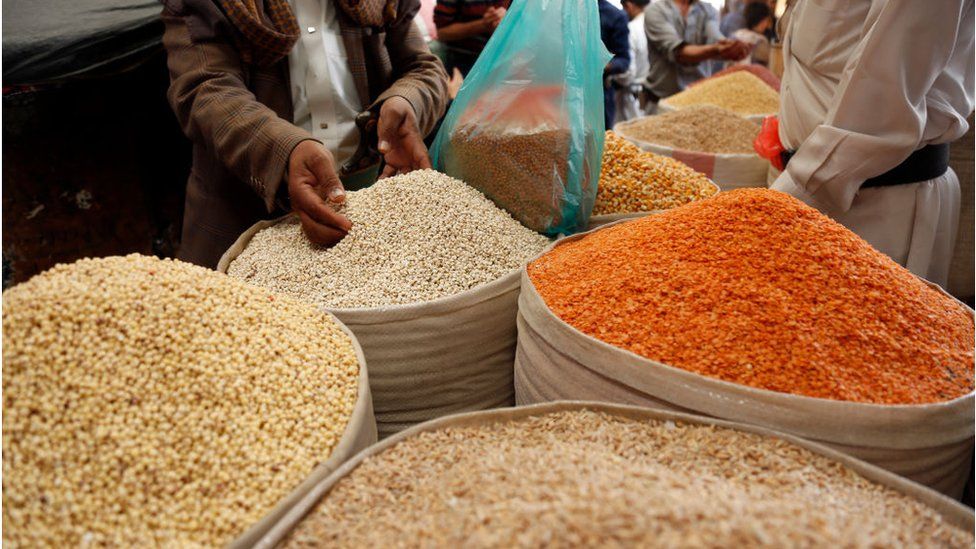
The impact is particularly visible in food markets, where rising prices continue to outpace stagnant incomes. For many workers, the money in their pockets is no longer enough to cover even the most basic household needs.
Data released by the National Bureau of Statistics (NBS) last Monday showed that Nigeria’s headline inflation eased slightly to 15.43 percent in July 2026, compared with 15.91 percent in June.
However, the moderation in overall inflation has done little to ease pressure on households, as food inflation surged to 20.31 percent in July from 17.52 percent in June. The increase was driven by sharp price rises in essential items including rice, garri, tomatoes, peppers and eggs.
For many mothers, shopping has become an exercise in painful choices. They now have to decide whether to leave milk behind to afford tomatoes, or replace meat with eggs in order to have enough money left for transportation home.
From civil servants to artisans and roadside traders, the experience is increasingly similar: savings have disappeared, basic food items are becoming unaffordable, and the middle class is gradually being squeezed.
For men brought up with the belief that a father’s responsibility is to provide food for his family, the crisis has become more than an economic challenge. It has also created a deeply personal burden, affecting their dignity and sense of responsibility.
This report examines the reality within Nigerian homes, highlighting the difficult choices, sacrifices and survival strategies families are adopting as the cost of living continues to rise.
The Death of “Three Square Meals”
For many families, the traditional pattern of breakfast, lunch and dinner has become increasingly difficult to maintain. Some households are now adopting a “one-zero-one” or single-meal routine as a survival strategy.
Mr Segun Michael, a resident of Abeokuta North Local Government Area of Ogun State, said he now eats before leaving home in the morning and takes whatever remains for dinner when he returns.
He explained that even simple home-cooked meals have become expensive, forcing parents to make difficult adjustments. In his household, the children are sometimes given garri during the day so that cooked food can be preserved for dinner.
According to him, reducing the number of meals for his children is not an option.
“You must cook and prepare them for school every day. Stew is a constant thing because it goes with rice and yam; you can mix it up with spaghetti, beans and other things.”
He said the rising cost of protein had become particularly difficult to manage.
“Ordinarily, a single small fish now costs about N2,500,” he said, calculating the cost for his family of five.
“For a family my size, you need at least two fish every two days. That’s N5,000 just on protein alone, before you even mention pepper, oil or gas,” he added.
The continued increase in food prices has disrupted his household budget, turning payday into an immediate struggle to purchase necessities before prices rise again.
He said his salary is often exhausted immediately after payment as he tries to buy essential food items in bulk.
“My salary ends the exact day I collect it,” he admitted, stating further: “The best you can do is quickly buy rice, garri, spaghetti and beans in bulk to lessen the amount you will spend in a month. That has been my strategy because I don’t have anybody to call if my family has nothing.
“I won’t lie to you. We had to cut some of our spending; that part of the protein has also been cut. When the children finish eating, we even hesitate to ask, ‘Are you full?’ We just tell them to drink water to support it.”
Stagnant Salaries and the Inflation Gap
Another father, Ismaila Mohammed, told DAILY POST that his salary is exhausted within two days, as his family responsibilities continue to outstrip his income.
He said repeated increases in market prices have made previous household budgets inadequate, forcing him to increase the monthly feeding allowance he gives his wife from N50,000 to N70,000.
Despite the additional N20,000, however, the amount remains insufficient.
Mohammed said food is not his only major financial concern, as the rising cost of education has added another burden. With his three children preparing to return to school after the holidays, he said their fees have risen from N400,000 last term to N550,000 for the new session.
“School fees are another issue. I have three kids in private schools, and in the last session I paid N400,000. But now, they are having a new session because they are on vacation now.
“So, in this new session, I am paying N550,000, which is an increase of N150,000,” he stated.
“For us salary earners, when salary comes, within two days, everything is gone.
“Things are getting more expensive, yet our salaries are not increasing,” Mohammed lamented.
Speaking with DAILY POST, academic Ife Olawale agreed that the economic situation had changed significantly, with salaries failing to keep pace with the cost of basic necessities.
She noted that even people who avoid unnecessary spending are finding it increasingly difficult to meet their everyday needs.
“When you look at the salary, it is not increasing, but the prices of commodities keep increasing,” she noted.
Olawale added that having multiple sources of income does not necessarily guarantee financial stability, as many people still struggle to afford basic necessities.
“We Spend More During Holidays and Survive Through Ajo” – Father of Four
For Mr Abolore Akanmu, a father of four in Obafemi-Owode Local Government Area of Ogun State, managing the family’s finances has become a constant balancing act involving borrowing, sacrifices and traditional savings schemes.
The financial strain also forced him to reconsider his children’s education, eventually moving them from a private school to a public institution.
“Most parents have withdrawn their children from hostels.
“The school keeps increasing the hostel money every time to feed the few students left. I had to withdraw mine so things could balance a little, so I took them to a government school,” he disclosed.
Akanmu said having his children at home during the holidays has further increased household spending.
“During the holidays, you spend even more,” he stressed.
He explained that buying food items in bulk is no longer financially realistic, leaving him dependent on garri and daily purchases to ensure the children have food.
He said he also has to provide allowances for his older daughter while meeting other household expenses, forcing him into a cycle of borrowing.
“A few days back, I went to buy garri. They must eat three times a day; it’s not like when they are going to school.
“Most of the holidays we spend more. I don’t depend on salary alone; I now depend on salary and loan. The more you borrow, the more you pay back.
“I’m paying the loan with another loan,” he disclosed.
Abolore said the economic hardship has also pushed him towards Ajo, a traditional communal contribution scheme that he had not previously needed. He now participates in at least two different contribution groups.
Despite the difficulties, he said he remains hopeful about the country’s future.
“I have faith in Nigeria. I have faith, and I have hope.”
Market Realities: “Money of Two Dozen Now Buys Only One”
Traders in local markets are also struggling with the impact of inflation, caught between sharply higher wholesale prices and customers who accuse them of increasing prices unnecessarily.
Abike Alade, a fruit seller in the Oke Ilewo area of Abeokuta, said inflation has significantly reduced the value of her trading capital.
She explained that N50,000, which was once enough to stock an entire stall, can now purchase only a limited quantity of goods.
According to her, the price of a dozen watermelons has increased from about N7,000 to between N14,000 and N25,000. Similarly, a carton of apples that previously cost N22,000 now sells for as much as N60,000, forcing traders to sell three apples for N1,000.
“Before, we sold apples for N200 per one; even before, it was sold for N100. But now there’s no apple for N200 again.
“We were buying a carton, the small ones, for N22,000, but now it’s within the range of N50,000–N60,000. You can see the difference, and we have just 198 pieces in a carton.
“The difference is very clear. When we sell the apples to customers for three for N1,000, they think we want to cheat them,” she told DAILY POST.
The pressure on her business has also affected her personal finances. As a single mother, Alade said feeding her family has become another daily struggle.
“Before, I could use N2,000 to cook a decent pot of food,” Alade lamented.
“Now, if I have N5,000, it is just to manage ourselves, especially as 1kg of cooking gas alone is around N1,500. We are all just managing to survive,” Alade added.
The Extinction of Lower Denominations: N5, N10, N20 and N50
The continuous increase in prices has also diminished the usefulness of lower naira denominations such as N5, N10, N20 and N50.
DAILY POST observed that traders increasingly reject the notes because very few market items can still be purchased at such low prices.
To deal with the situation, small businesses have increasingly rounded prices to the nearest N100 or N200, as lower denominations are no longer accepted for many transactions.
Oluwaseun Raymond, a resident of Abeokuta South, said the rejection of the lower denominations is largely linked to the fact that almost nothing in the market costs less than N50.
He said the decline in the value of the naira has also significantly increased household food budgets, noting that food for a small family that previously cost around N20,000 now requires at least N40,000.
“What do you want to buy at the market that is sold for N20? There is nothing, not to talk of N10. The only way you can spend those denominations is if you want to buy something of maybe N100 and you give them five pieces of N20.
“Funny enough, a lot of them are even rejecting it because there is no way you can spend that money independently.
“The minimum now is N50 for candy and maybe one piece of Maggi. If things continue like this, it will be impossible for you to buy something of such in the market,” he stated.
He argued that living standards have deteriorated considerably, adding that although the previous administration was not “palatable”, he believes the current government has made the situation worse.
Removal of Fuel Subsidy Benefiting Nigerians – Tinubu Insists
While many Nigerians continue to struggle with rising household expenses, the Federal Government maintains that its economic policies are designed to deliver long-term benefits.
President Bola Tinubu, on Thursday, said the removal of the fuel subsidy was benefiting ordinary Nigerians, contrary to claims that it had worsened their situation.
Speaking when he received the newly elected leadership of the Nigeria Union of Petroleum and Natural Gas Workers (NUPENG) at the State House in Abuja, Tinubu said funds saved from subsidy removal were being used to pay salaries and finance major infrastructure projects.
He said, “The fuel subsidy is gone for the benefit of our great country. I will soon publish the utilisation of what it is. I listen to people, they say common man and all of that. Who are the people receiving the salaries in the local government administration?
“Are they not common men and women receiving salary regularly at the state level? Are they not common men and women? The ordinary people receive salaries at the federal government regularly, and it affects all the market women around us, including your wives.
“But I’m glad you have seen the effect of being able to find funding for long-term projects; Lagos-Ibadan Road, Abuja-Kaduna Highway, Abuja-Kano, and Sokoto-Badagry highways and many other road networks. It’s all for the good of us, the good of our economy and the safety of our people.”
The President also assured Nigerians that details on how the savings from subsidy removal are being utilised would be made public.
However, the experiences of households suggest that public sentiment remains divided between cautious optimism and deep frustration, particularly as the 2027 general elections draw closer.
Several residents said their voting decisions would be based primarily on their personal experiences and living conditions rather than political promises.
Raymond said he remains determined to participate in the electoral process.
“I have made up my mind to participate in the process. I must vote for my conscience. I am ready, and I already know who I will support based on how these policies affect us.”
Alade, however, expressed doubts about the possibility of meaningful relief, saying the current economic hardship has left little room for patience.
“If he comes back for the 2nd time, that one is going to be worse than what we are facing presently,” she stated.